

A discussion on the current state of fundraising with leading minds in the venture capital industry
The world of venture capital is constantly evolving, with companies always looking to stand out among a bustling market. Founders face many challenges as they lead their businesses through all phases of growth, from the crucial early fundraising stages through to long-term sustainability.
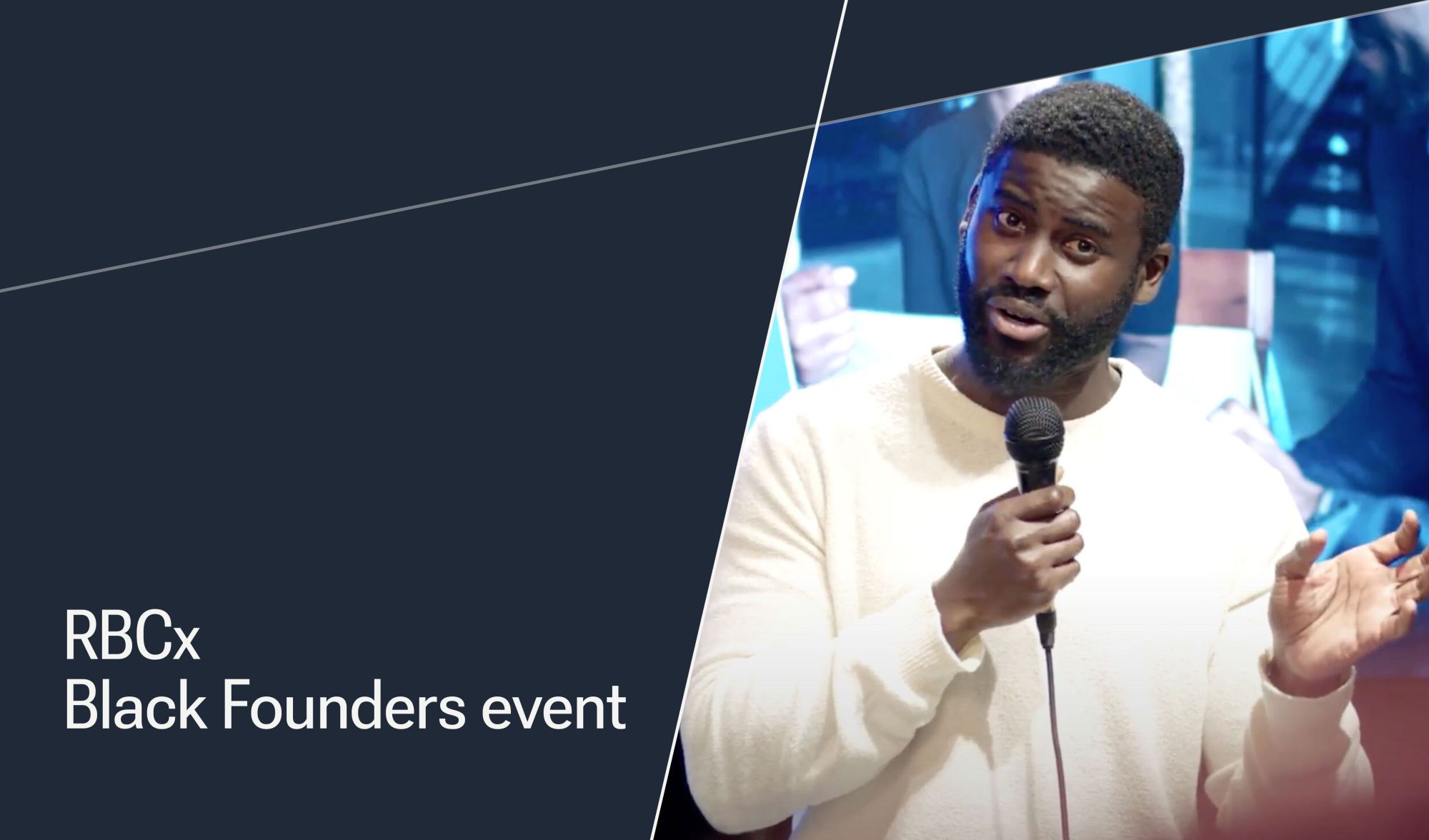
How to face these challenges effectively, wisely, and swiftly was at the centre of the discussion at the inaugural Summit to Scale event, hosted by RBCx and Catalyst Commons. Matt Roberts, Managing Director, VC Coverage at RBCx, moderated “Fundraising in a high scrutiny environment,” bringing together some of the country’s sharpest minds currently operating in the venture capital world. The conversation was a chance for these innovators to shed light on the current fundraising environment, discussing strategies for investor interaction and how investor appetite ranges across verticals, sectors, and technologies.
Location isn’t everything
The conversation began with a discussion of location. While in past eras entrepreneurs seeking funding often relocated to Silicon Valley, the possibilities of virtual interaction have made the reality more flexible.
For Michelle McBane, Managing Director at Standup Ventures, the answer isn’t always found in the U.S.
“If you’re going to do something and go big in that environment, there’s a lot of money there. If you’re a young person and you want to be somewhere exciting with a lot of momentum, you’re probably going to go down south. But I would argue that our community here is just as strong or stronger.”
Mike McCauley, general partner at Waterloo-based Garage Capital, advised keeping an international perspective.
“Regardless of where you’re based, going to the Bay Area is really important, just to be networking and understanding the level of aspiration there. Ultimately, that’s our competition. Our bar isn’t Canadian companies—our bar is global companies. And the headquarters for most startups is Silicon Valley.
“There are positives and negatives to Silicon Valley’s ecosystem, and I still spend a lot of time there. It’s always important to get the energy, to understand what companies there are working on, how they’re doing things. There’s a different level of risk appetite there, but there are also strengths in being able to build an organization here in Canada.”
Gil Nayot, Partner at Vertu Capital, sees things similarly. “Canada continues to be a place with really strong technical capabilities. It’s a very favorable place to start a business from a capital allocation perspective. We’re in a unique position to take advantage of the best things and specialized talent that other countries than the U.S. have to offer. Most of our businesses and most of our pipeline, about two-thirds of our revenue, comes from outside Canada.”
Rick Coccimiglio, CFO of VueReal Inc., added his perspective, gained from running a company that recently raised $58 million yet still chose to remain in Canada.
“We never really thought about having to relocate to raise capital. When we were out talking to investors, we were talking to investors in Asia as well as the U.S. and Canada.
“One key for us was that our team in Canada is very multicultural. We’re hiring from around the world. It ended up being predominantly Canadian investors on our cap table, but it wasn’t about American investors not coming in. It was about what any investor would be willing to do for us.”
Declines can lead to opportunities
Recent headlines have reported a significant decline in capital availability in Canada. According to RBCx’s report on the state of venture capital investment, Canadian VC funds raised more than $15.7 billion in 2021-2022. Since then, however, these numbers have swiftly declined, with only $3.4 billion raised in 2024 and fundraising levels for 2025 continuing well below cycle averages.
What does this shift mean for entrepreneurs? How does it affect the seed stage? Or do these reports not reflect the reality?
“If we need to make a deal, we’ll find partners that we want to work with,” McBane said. “The capital is there. This is probably one of the best times to invest in early-stage companies, because they can be so incredibly capital-efficient. We’ll have teams of just two or three people. Maybe the CTO is very experienced, good at what she does, and they can build really quickly. This can give founding teams optionality around their capital needs and fundraising planning.”
Recognizing risk and finding your path
McCauley believes a decline in available funding means entrepreneurs need to be smarter about what they hope to accomplish in their fundraising strategies.
“When the availability of capital is high, a lot of stuff gets funded that maybe shouldn’t. The bar goes down in terms of chasing certain goals, and ultimately that money’s going to go somewhere because the people who have it are incentivized to invest it. When there’s less capital, there’s naturally less companies getting funded, so founders need to be much more certain about what they hope to accomplish.
“It’s not necessarily going to be a straight line. Founders should be thinking about what a path to profitability might be if there’s no capital available, just to continue operating. Then, if things go well, you’ll clearly know where to put more capital, and that can be your fundraising strategy. But if it doesn’t end up working out as you’d thought, then maybe you should just move on, even if that means returning capital raised.
“Failure acceptance can be difficult. We’re all working in a space where the numbers are stacked against us. Nine out of 10 companies are not going to make it.”
Nayot agreed. “When you’re starting a company, you have to acknowledge that, along with a lot of opportunity, you’re taking a lot of risk. The failure rate is pretty high.”
Nayot then described working with companies when questions around growth and scale are just beginning. Those initial stages can offer a company a chance to solidify its priorities.
“Knowing who you are and what you want to be is really important, and you should find a partner that aligns with that mission. That’s where we spend a lot of our time, making sure that the company vision, and the goals of the founder and the team, match up with the type of investment we want to take on.”
Make your own milestones
In the tech world, there are sometimes long cycles between the building and funding phases. For VueReal, there was a gap of two-and-a-half years between Series B and C funding rounds.
Naturally, longer timelines can affect relationships with investors. What traction metrics are they looking for? Are they hovering in the background, deciding what milestones and targets need to be reached?
“Their job is really to test whether the milestones we set are aligned with what’s happening in the market right now,” Coccimiglio said. “The very first thing we did when closing ground was set the milestones and say, this is what we’re going to do with the money we have. It’s going to get us X number of months, then we’re going out for another round. You’re always looking at what the design needs are, what the technical hurdles are to overcome. And they’re looking at leadership, to see if we have the right vision to actually take the company there.”
Preparation is key
McBane said her experience has shown how during those early rounds, preparation is essential to keep things moving forward.
“As in any sales process, you should understand the person on the other side of the table: where they invest, what their other portfolio companies are, what their process is. When we first started, it was still a bit of a black box in the VC world. That’s definitely changed. There’s so much information out there that’s readily available, there’s no reason to not be prepared. You need to make sure you put your best foot forward and create momentum in the market.”
When investors look into companies, signals indicating that crucial momentum can be integral to their overall assessment. What those signals are, however, can vary.
“Founder-market fit is absolutely one,” said McBane. “We go deep on the founder at that stage because we recognize that the business today will be very different in 12 months. How are they going to work through that process? Are they able to learn? How are they going to attract talent and customers? Those are all considerations.
“We had a situation with one founder recently where they weren’t transparent with us, and we found out after the fact. When someone breaks that little bit of trust, it’s tough to back that.”
Founders at the centre
McCauley and his team also place a strong focus on founders when making funding decisions.
“Having been founders ourselves, when we started Garage, we wanted to be that style of investor we met in Silicon Valley. Many were former founders too, so they knew what it was like to be in our shoes.
“Ultimately, if things work out well, you’re going to be on the same team. I always encourage founders to try and get to where they feel like they can be on the same team as a potential investor prior to them making that investment.
“It can be as simple as crafting the right introduction for a particular network contact and following up. Just creating data points that allow you to feel like you’re working together, to get them excited about how you operate and the potential opportunity that exists.
“A lot of it does come back to the founder: who they are, how they go about things, and the market fit of why they’re best positioned to be working on what they’re working on.”
Navigating bumps in the road
Nayot offered a reminder that no partnership or investment unfolds without some setbacks. “There’s always a bump in the road. At all stages, you’ve got to spend time making sure you’ve got the right partners around the table that you can work constructively with.”
“There are going to be times where it’s tough, and that’s when true colors show,” said McCauley. “I once did a reference on a prominent Silicon Valley investor that I didn’t necessarily need to do, but it totally changed my decision. I had another founder tell me, look, this investor is amazing, so long as you’re on the same page. But as soon as your opinions diverge, they’ll write you off. That didn’t sound like somebody I could work with, and we ultimately didn’t take money from that individual.”
“It’s just like sales,” suggested Coccimiglio. “You get to know your customer, doing your due diligence. You’re looking into their portfolio, calling up everyone in your network and asking questions. Then, when you’re getting into the later rounds, you can leverage that knowledge.”
Personal connections make the difference
The last few years have seen dramatic changes in how we all do our jobs, and the venture capital space is no different. With the pandemic’s disruptions mostly behind us, it seems there’s been a reversion back to in-person engagement.
For McBane, those personal connections are vital. “COVID changed a lot of things, and we’re getting much better at virtual. But we still try to meet the person at some point in the process, even just for coffee or dinner. That interaction is important to us, and it’s good for both parties as well.”
McCauley confirms that while there’s a returned emphasis on in-person contact, it isn’t always an option. “Sometimes there just isn’t an opportunity to meet because of the timeline needed to make a decision. There are some benefits to being able to do things virtually, but we love to meet in person when we can. It ends up deepening the relationship outside of just the transactional nature, and those are the stories that are most fun to be part of.”
Timelines, targets and vision
This led to questions about timelines and the challenges of juggling fundraising with the practicalities of building a business. How should emergent founders best manage their energies and time alongside working toward funding targets?
“When you’re focused on fundraising, it does, sadly, take away from business,” said McBane. “We’ve seen where numbers have come in and founders missed something important because they were really focused on fundraising. The time needed really depends on the stage and the whole package, building relationships early for that next round and helping to accelerate that.”
McCauley confirmed that targets are useful but shouldn’t be the only focus. “Generally speaking, I’d say six months is probably a good rule of thumb on starting the process of fundraising being full-on priority number one for the founder or CEO. But that’s not when the process starts. Hopefully relationships have been built prior to that.
“You want people to get excited about what you’re building. You’re putting dots on the progress time graph, so that when you are fundraising, you have a bunch of meetings and relationships built ahead of that. Then, when you open up the next round, you can create a sense of urgency, which can be the hardest thing to accomplish.
“The biggest learning that many founders have to do is validating that the investor actually has the money and is suited for what they’re building. You can’t do that qualification at the outset. The better way is to first get the investor really excited about what you’re doing on the first call. The big vision, what you’ve accomplished.
“Then, toward the end of the call, you leave time to qualify them. You turn the tables a bit to say, hey, this isn’t a one-way street. It’s not just you interviewing me, I’m also interviewing you as the right partner. What hopefully comes across then is how the process will look for that person to get the deal done.”
The fundraising journey can be demanding and convoluted, with many hurdles to overcome, but the rewards of meeting those demands can make it all worthwhile. This conversation showed how learning from early mistakes and forging strong relationships are essential to surviving that high-scrutiny environment and getting any business started on a path to success.
RBCx offers support to startups in all stages of growth, backing some of Canada’s most daring tech companies and idea generators. We turn our experience, networks, and capital into your competitive advantage to help you scale and make a meaningful impact on the world. Speak with an RBCx Advisor to learn more about how we can help your business grow.
RELATED TOPICS
Other articles you may be interested in




 © 2026 RBC All rights reserved.