
Originally published May 29, 2023. Last updated Sept. 16, 2026.
Key takeaways
- Product-market fit (PMF) is about finding the right market for your product by identifying a compelling value hypothesis (features, audience, and business model) and applying it to a broader market.
- When PMF is lacking, word of mouth falls short and deals fail to close; when it’s present, customers buy your product as fast as you can provide it, with sales coming in organically rather than through rigorous marketing efforts.
- No single metric proves fit on its own. PMF is best measured by combining a predictive survey (the Ellis test) with behavioural proof, retention curves, NPS, and an LTV:CAC check.
- Startups often mistakenly undervalue and underprice themselves to attract their first customers. To achieve PMF, founders should instead reach real-value pricing and “old school” personalized efforts.
- Once signals confirm fit, with the Ellis test clearing 40% and retention flattening, priorities can shift from plugging churn to funding growth.
Achieving product-market fit is one of a startup’s most significant milestones. It’s what separates companies that survive and flourish from those that fail to make an impact.
However, most founders struggle to acquire those crucial first customers and achieve real PMF. Ideas and techniques regarding how to achieve and sustain fit can vary, even conflict.
For some advice and best practices, we turned to some seasoned founders with serious chops in the startup ecosystem: Ben Yoskovitz, founding partner at Highline Beta; serial entrepreneur and co-founder Shari Hughson; and Morley Ivers, CEO and co-founder of Cookin. These accomplished founders shared their expertise on how companies at various stages of their lifecycle should approach PMF and translate their fit to lasting success.
In this guide, we’ll show founders how to recognize the signs of product-market fit, measure it objectively, reach it systematically, and use it to win and retain first customers.
What is product-market fit?
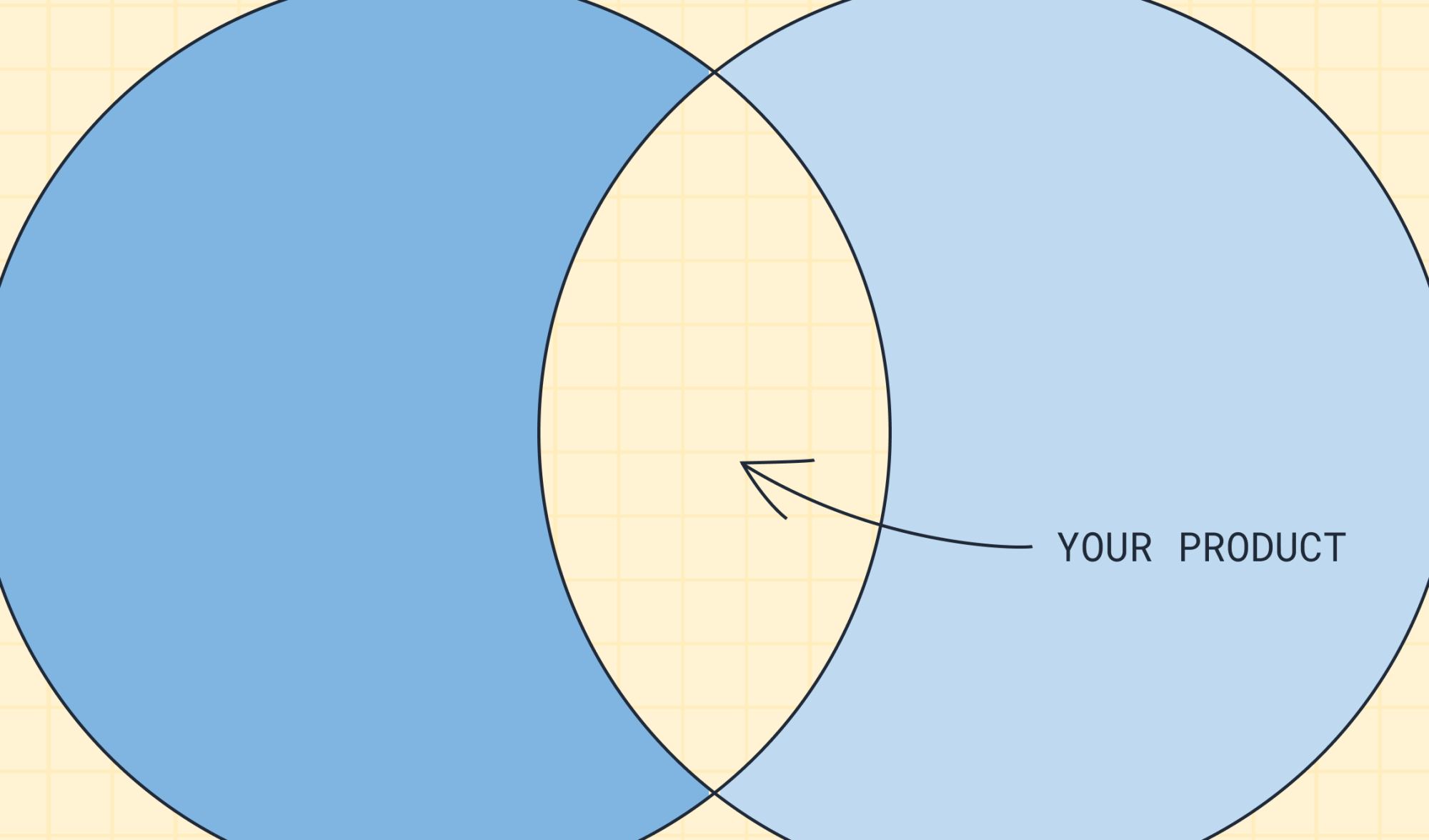
Simply put, PMF describes when a product and its value hypothesis find a suitable base of customers. According to influential tech founder Marc Andreessen, “product-market fit means being in a good market with a product that can satisfy that market.”
On a deeper level, it means identifying a compelling value hypothesis — the key assumption(s) about why a customer would use your product, such as its features, its most likely audience, and the business model used to entice customers — and applying it to a broader market.
Andreessen has called PMF “the only thing that matters” early in a startup’s life, and suggests that a startup’s journey can be divided into “before” and “after” product-market fit. Still, companies often go through many iterations before they find their fit, and many fail before ever achieving it.
After all, you can have the greatest product in the world and a team of top-notch talent, but if there’s no market for it, or if the market exists but you’re unable to reach it, your chances of success are slim. That’s why PMF is essential to any viable business strategy.
Signs you’ve achieved product-market fit
When product-market fit is lacking, customers aren’t getting the desired value from the product, word of mouth falls short, adoption is slow, sales cycles drag on, and deals fail to close.
When you do have PMF, customers are buying and using the product as fast as your company can provide it. Revenues are solid, the company is growing at a healthy rate, and interest is building from the public and potential investors alike. Sales come in organically or through customer referrals, rather than through relentless marketing efforts.
Word of mouth and sensing the shift
Hughson knew her first startup, a service-driven home healthcare company, had reached product-market fit when sales grew from one or two clients in a seniors’ retirement home to 10 every week, and eventually to 80% of the clients in the home.
“The sales that I’m searching for and converting are hard work,” she says. “I know I have product-market fit when someone is telling someone else to come and buy, and they do.” With PMF, founders will sense a definite shift from pushing for every sale to sales rolling in. “You’ll know it. And you’d better be ready.”
It’s crucial that fit be assessed based on real data, not wishful thinking. As Alex Schultz, chief data officer at Meta, has observed: “The number-one problem I’ve seen for startups is they don’t actually have product-market fit when they think they do.”
Founders should therefore be cautious in declaring market fit too early. Along with growth in sales, the company’s economics need to make sense.
“You can run into the trap of putting more and more capital into a startup that keeps the company growing,” says Yoskovitz. “But if the math never makes sense, it will collapse, whether because customer acquisition costs too much, they don’t stick around long enough, or any other reason.”
Founders will feel a definite shift — from pushing for every sale to the sales rolling in. “You’ll know it. And you’d better be ready.”
Customer retention: Crossing the threshold
Today’s economic climate has investors raising the bar on everything, including their definition of PMF. Yoskovitz advises startups to adopt the same higher standards: “It’s not easy to get there, even if you feel that pull.”
For a marketplace business such as Cookin, the value proposition requires buy-in from two major stakeholders: cooks and customers. Ivers knew they had something special when there was a pattern of talented cooks approaching them with tears in their eyes, describing how the Cookin platform transformed their earning potential.
For the customer side of the business, it was during a walk through his neighbourhood that Ivers realized they’d crossed that threshold from push to pull. “I was walking down the street on recycling day and seeing multiple homes with Cookin bags in their clear recycling bags,” he recalls. “Home after home was enjoying Cookin.”
As a data-driven company, Cookin looked beyond qualitative experiences for proof of a shift in product-market fit. Before being funded, he says, “We had a 56% return rate of people coming back time and again. We came up with a magic number of three. If someone purchased from Cookin three times, 60% of those customers would return every week.”
It was a signal they could start referral programs and partnerships, add sophisticated tools, and raise capital. Even so, Ivers is quick to add, “I don’t ever rest on laurels and feel fantastic.”
How to measure product-market fit
Product-market fit can be measured with two types of methods: quantitative and qualitative. A full understanding of a company’s fit (or lack thereof) usually requires a combination of both.
Quantitative methods of measuring product-market fit
The Sean Ellis test (also called the 40% test) is a widely used survey-based method for measuring PMF. It’s named after Sean Ellis, who analyzed nearly 100 startups to determine whether a product is essential to its users.
The test poses one core question to active users: How would you feel if you could no longer use this product? The benchmark for PMF is when at least 40% of respondents answer “very disappointed.” Companies that clear that mark consistently show the organic growth and retention patterns associated with genuine fit, while those below it struggle to grow sustainably.
Retention curves track what percentage of a signup cohort remains active over time. A curve that decays toward zero indicates no fit (yet), while one that flattens into a stable floor reveals a durable core that keeps returning. A flattening curve suggests PMF, with customers showing loyalty by sticking with the product.
A net promoter score (NPS) indicates how likely users are to recommend a product on a scale of 0 to 10, calculated as the percentage of promoters (9-10) minus the percentage of detractors (0-6). NPS measures advocacy, showing whether customers value a product enough to stake their reputation behind it. It complements the Ellis test by measuring enthusiasm and referral intent rather than loss aversion.
A customer lifetime value to customer acquisition cost ratio (LTV:CAC) compares what it costs to acquire a customer against the profit that customer generates over their lifetime. For example, if it costs $100 to acquire a customer through advertising and sales, a healthy ratio means that customer is worth at least 3x that amount in revenue (i.e., $300) over their entire lifetime. An unhealthy ratio, meanwhile, shows a company paying about as much for a customer as that customer is worth — a sign of weak retention or weak willingness to pay.
No single metric or framework on its own proves fit. The most thorough measurement combines a predictive survey (Ellis), a behavioural proof (retention), an advocacy signal (NPS), and an economics check (LTV:CAC). If all four look positive, it suggests good progress toward PMF.
Qualitative methods of measuring product-market fit
Qualitative measurement of product-market fit relies less on metrics and more on close attention to external signals, including behaviours and reactions you can’t engineer or incentivize.
The clearest indicator is word of mouth: when people who’ve never heard of your company start expressing interest because an existing user told them about it, that’s demand pulling rather than you pushing. Closely related are unprompted referrals: customers proactively introducing your product to peers without a referral program or reward prompting them. The voluntary, unrewarded nature of that behaviour is what makes it meaningful.
Customer feedback is another useful signal, specifically its quality. When you’ve found fit, users move past early issues and start asking more specific questions about deeper features, integrations, and use cases. They’re seeking ways to get more value, not questioning whether the product is worth using at all.
Inbound demand is another measure of fit. Signals such as unsolicited signups, press coverage, and partnership interest show your product resonating organically beyond current customers.
These indicators can’t be tracked numerically, but they can be observed as human-centric evidence alongside quantitative metrics to show whether product and demand are in sync.
How to find and achieve product-market fit
Achieving product-market fit is one of a company’s most important challenges, especially early on. Rather than a moment of sudden clarity, it’s usually an incremental process of systematically narrowing in on who needs your product and why. Here are steps founders can take to find their own PMF process.
Identify your target customer as specifically as possible
Don’t try to reach every customer; focus instead on a real, describable group. Consider their general attributes, such as their industry role or job title, company size, geography, and the specific situation or need your product satisfies. If your segment is so broad that you can’t identify your ideal customer, you’ll never find them.
Validate the problem
Is the problem you’re solving painful enough that people would pay to solve it? To answer this question, reach out to a core group of potential customers and ask how they’ve dealt with it before: what they did, how long it took, what it cost, and what other solutions they’ve tried. How they describe the need — in their own words, without prompting — can reap valuable insights and signal a demand waiting to be fulfilled.
Test with an MVP
A minimum viable product (MVP) is the most basic, stripped-down version of your product that still lets users experience its core value. Its purpose is to test whether the product’s core promise holds, even without a polished final version. Giving users early access lets you confirm the value is real and meaningful before investing further. Features and details can be refined later, reducing any wasted time and money in development.
Iterate based on feedback
Testing lets you develop your product based on what really matters to users — which isn’t always the same as what they say they want. Group feedback into themes, separating feature requests from underlying needs and prioritizing issues raised by multiple users.
Each cycle should test a specific assumption, with results measured then fed into the next change. Move quickly, but resist the urge to act on every request — the goal is to identify the features and behaviours that consistently deliver value, then make that experience reliable and repeatable.
Measure signals using quantitative and qualitative methods
Quantitative metrics indicate what’s happening: activation rates, retention over time, usage frequency, and conversion. Qualitative methods show the reasons behind the numbers: user interviews, survey responses, and observing how people use the product. (See “How to measure product-market fit.”)
Neither data set tells the entire story on its own, so determine which core metrics suit your company’s definition of fit and use them as benchmarks for important decisions.
Recognize the shift from push to pull
According to Andreessen, you’ve found product-market fit when customers want your product badly enough that demand starts pulling rather than you pushing. In the push phase, acquiring customers takes effort: ad campaigns, demos, discounts, and other persuasion. In the pull phase, demand comes to you, as customers refer peers, word of mouth widens, inbound inquiries increase, and retention and usage climb. When growth becomes easier, that’s a sign PMF is happening. (See “Signs you’ve achieved product-market fit.”)
The Superhuman PMF Engine can be a useful starting point for assessing fit. Built on the Ellis test, it’s a data-driven system of measuring, tracking, and improving product-market fit through few concrete, repeatable steps:
- Ask the key question. Survey users: “How would you feel if you could no longer use the product?” Responses range from very disappointed, somewhat disappointed, to not disappointed.
- Aim for the 40% threshold. Ellis found that companies with strong traction usually had at least 40% answering “very disappointed,” while weaker ones fell below that number.
- Survey the right users. Focus selectively on users who’ve recently experienced the core product, e.g., at least twice in the last two weeks. You can get directionally correct results with around 40 respondents.
- Ask follow-up questions. Your three main questions should be: who among those surveyed would most benefit, what the main benefit is, and how the product could be improved.
- Track the “very disappointed” percentage closely. Make this your metric of greatest focus, reviewing it weekly, monthly, and quarterly.
- Turn it into an objective and key result (OKR). Set your key result as increasing that percentage, engaging your product team toward improving fit.
Using this approach, Superhuman lifted its product-market fit score from 22% to 58%, and other companies have since adopted it to similar success.
How to acquire your first customers
Attracting early adopters is essential for growing startups. However, it’s easy to get sidetracked by sophisticated marketing tools, chasing capital, or reworking product features, all of which can stall or impede the more vital task of customer acquisition.
Start with pricing — what you charge shapes everything that follows. As Hughson notes, one of the biggest mistakes startups make in acquiring customers is with their pricing strategy. “Most startups undervalue and underprice themselves,” she says.
The temptation is to underprice, making it easy for potential customers to say yes. But then the discount becomes the story, rather than the product. (See “Common product-market fit mistakes.”) Instead, place a real value on what you’ve built, set the price there, then consider offering a discount to early adopters rather than building a low price into your foundation. That way, your feedback comes from users making authentic decisions based on real factors.
For B2B sales that require a pilot program, Hughson advises placing a value on that program, then drawing up an agreement that explains your discount, why it’s offered, and what the customer should provide in return for it (e.g., feedback or referrals).
Hughson also encourages founders to go “old school” by finding ways to talk to people in person, one at a time. Pilot programs are useful here, offering short, structured engagements with a handful of target customers. Personalized efforts like direct outreach, founder-led demos, and handwritten follow-ups help you engage customers directly and understand who your product is really for. Asking focused questions about their needs and habits improves not just your product, but how you sell it.
Once your signals start to confirm PMF, budgetary priorities can then shift from acquiring new users and minimizing churn toward growth. When advising businesses, Hughson tells them to know their numbers inside and out. “What does it take to get cash positive? Where can you find enough customers to get to that? It’s all a money game.”
Yoskovitz advises founders to get those first 100 customers by whatever means. “Don’t get too sophisticated,” he says. “Find your hack. The most important thing is, can you acquire people? And do they actually care? If they don’t come back again, it doesn’t matter if you’re great at acquiring because the customers will disappear anyway.”
“Find your hack. The most important thing is, can you acquire people? And do they actually care?”
Today, Cookin boasts more than 20,000 users in Toronto, but as Ivers admits, their first 1,000 customers were friends and family. “How did we get them? Our wedding lists!”
Cookin now utilizes a few channels for growth, including affiliate programs, advertising, and in-house branding and marketing. Its advertising strategy takes a scientific approach — like the LTV:CAC-based method — that understands what each customer is worth and how much the company is willing to spend to acquire them. The startup places tremendous value on word-of-mouth referrals, which hinge on its commitment to deliver an “11 out of 10” Cookin experience for every customer. Soliciting and responding to feedback is crucial.
“The least expensive way to acquire a customer is that they have a magical experience and tell a friend or neighbour about it. That costs us nothing,” says Ivers. “But if that customer had a terrible experience and we don’t listen and course-correct to turn it into something special, we’ve lost them and probably six other people they’re going to tell.”
This is why listening and acting on customer feedback is ingrained in the company’s ethos.
“It doesn’t matter how much venture capital we’ve raised. We can’t afford to ignore that kind of feedback.”
Common product-market fit mistakes
Achieving product-market fit means questioning your company’s approach — and sometimes making moves that might feel counter-intuitive. Here are a few common mistakes to avoid.
Scaling before real fit. Overactive hiring, paid acquisitions, and building enterprise features before retention is proven can be expensive mistakes. Until the market is pulling the product, every dollar spent on ambitious growth is likely wasted.
Underpricing and undervaluing the product. Many early startups use low prices to attract quick sales, but a discount can distract from the real value a product offers. Charging a real-value price gives a clearer view of important signals and metrics.
Focusing on product features rather than sales. When conversion lags, teams often decide to build more features, assuming product-market fit will follow. But sales should be the priority in the early stages, and that means focusing on engaging with customers, not adding features. “Sales is all a startup should be focused on. Every feature you’re building, just stop. Go and get sales,” advises Hughson.
“Sales is all a startup should be focused on. Every feature you’re building, just stop. Go and get sales.”
Ignoring unit economics. If it costs more to acquire a customer than they generate over their lifetime, growth is progress toward failure, not toward fit. Without sustainable unit economics, scale amplifies losses rather than gains.
Confusing attention for demand. Waitlists, press coverage, and seed funding are signals founders routinely mistake for product-market fit. Launch buzz or early signups don’t necessarily indicate strong demand. Real demand means people will keep using, paying for, or missing the product, as demonstrated by retention that flattens and an Ellis score clearing 40%.
Targeting the wrong customer segment. Founders too often form general assumptions based on audiences who aren’t their target users. Segmenting to the right customer — those who will actually pay to use the product — translates into real traction and long-term sustainability.
Treating PMF as a one-off milestone. Product-market fit can shift at any time as markets evolve, competitors emerge, and customer desires change. Companies should continually re-evaluate how they’re meeting and sustaining PMF — or risk losing it.
Product-market fit: When the push pays off
Product-market fit shouldn’t be thought of as a single mystical moment where everything locks together and success follows. Treat it instead as an ongoing question to resolve, using the right tools and methods, and the path to PMF gets considerably clearer.
When you achieve fit, the nature of your company’s growth changes. Acquisition ceases to be a constant push and instead becomes a pull, where referrals, word of mouth, and demand all start coming to you. That’s a shift worth striving for, where all the effort and passion you’ve invested in your business really starts to pay back.
Gain more valuable insights from RBCx
RBCx helps new founders succeed in their startup journey. With 150+ years of institutional knowledge, we turn our experience, networks, and capital into your competitive advantage to help drive lasting change. Speak with an advisor to learn more about how we can help your business grow.
FAQs
RELATED TOPICS
Other articles you may be interested in





 © 2026 RBC All rights reserved.